
The Supreme Court of India has dismissed the use of information from 'WhatsApp University' as evidence in a case concerning religious freedom and discrimination against women at religious sites, including the Sabarimala Temple.
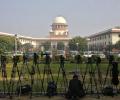
A nine-judge Supreme Court bench has commenced hearing on petitions related to discrimination against women at religious places, including the Sabarimala temple, and the scope of religious freedom across faiths.

Wipro Technologies has issued a statement affirming its commitment to employee welfare and a safe workplace, stating it is fully cooperating with authorities regarding allegations of religious harassment, workplace discrimination, and forced resignation made by a former woman employee in Pune.

The Supreme Court has agreed to hear a plea on May 29 seeking a direction to the Nagpur Parsi Panchayat to treat a Parsi woman equally with her male counterparts, even after she marries a person of another faith, challenging a rule that allegedly strips Parsi women of their religious identity upon inter-faith marriage.

A nine-judge Supreme Court bench has reserved its order on petitions related to discrimination against women at religious places, including the Sabarimala temple, and the scope of religious freedom.
The Supreme Court of India has stated that religious institutions must have structure and norms for their functioning, emphasising that the right to manage a religious institution does not imply an absence of order.

'The state government does not believe in disallowing non-Hindus to do business outside Hindu temples.'

The Centre has informed the Supreme Court that the restriction on women of menstruating age entering Kerala's Sabarimala temple is a matter of religious faith and denominational autonomy, falling outside the purview of judicial review. Solicitor General Tushar Mehta argued that courts should not apply 'secular standards of reason' to religious practices.

The Vishva Hindu Parishad (VHP) has appealed to the United Nations to intervene on behalf of religious minorities in Pakistan and Bangladesh, citing human rights violations.
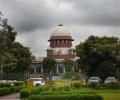
The Supreme Court has stated that roads cannot be blocked for religious activities and that while religious denominations have autonomy in worship, the government can interfere if secular activities are affected.
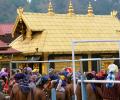
The Travancore Devaswom Board (TDB), managing the Sabarimala temple, argued in the Supreme Court that religious beliefs should be judged subjectively by the community, as the court hears petitions related to discrimination against women at religious places.

A woman engineer at Tata Consultancy Services (TCS) in Nashik has alleged harassment and religious coercion, including derogatory slurs and inappropriate touching. Police have arrested eight people and are searching for another accused. TCS has launched an internal probe and suspended employees allegedly involved.
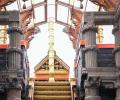
The Supreme Court observed that Hinduism is a way of life, stating that mandatory temple visits or rituals are not necessary to be considered a Hindu; even lighting a lamp at home suffices.
The Supreme Court of India has observed that the practice of excommunicating Parsi women for entering into interfaith marriages is prima facie discriminatory, emphasising that the right of conscience is a birthright.

UN experts have voiced serious concerns regarding the ongoing abduction and forced religious conversion through marriage of women and girls from minority communities in Pakistan, highlighting that impunity is fuelling the practice.

The Centre has supported the restriction on women of menstruating age entering Kerala's Sabarimala temple, arguing that the Supreme Court's 2018 judgement assumes male superiority.

The Supreme Court of India has voiced concerns about the potential consequences of individuals questioning religious practices in constitutional courts, warning it could lead to the fragmentation of religions and civilisation. A nine-judge Constitution bench is hearing petitions related to discrimination against women at religious places and the scope of religious freedom.

The Supreme Court questioned the chief priest of the Sabarimala Ayyappa Temple regarding the constitutionality of preventing believers from touching the deity, during hearings on discrimination against women at religious sites.
The Shabari story in the Ramayana found mention before a nine-judge constitution bench of the Supreme Court on Wednesday while hearing petitions related to discrimination against women at religious places, including the Sabarimala temple in Kerala.
The Supreme Court is hearing petitions related to discrimination against women at religious places, including the Sabarimala temple. A nine-judge bench is examining the scope of religious freedom and the exclusion of women based on age and menstrual status.

There must be no discrimination on basis of religion, said Home Minister Rajnath Singh.

Legendary filmmaker Bharathiraja has passed away at 84, leaving an indelible mark on Tamil cinema with masterpieces like 16 Vayathinile, Oru Kaidhiyin Diary and Karuththamma, among others.
The Supreme Court of India has asserted its jurisdiction to determine what constitutes a superstitious practice within a religion, during a hearing on petitions related to discrimination against women at religious sites.

Samajwadi Party president Akhilesh Yadav criticised the BJP government's record on women's safety, alleging increased crimes and discrimination.
The Supreme Court of India has agreed to examine a constitutional challenge regarding gender discrimination within Parsi personal law, specifically focusing on whether a Parsi woman loses her religious identity upon marrying outside the community.
The Supreme Court of India questioned the Centre regarding the eligibility of non-devotees to challenge the customs of the Sabarimala temple in Kerala, during a hearing on religious freedom and discrimination against women at religious sites.

An accused in the TCS Nashik sexual harassment case has filed for bail, claiming the complaint arose from the victim's frustration over unrequited feelings or parental pressure. He denies making remarks that hurt religious sentiments.
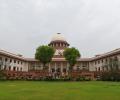
The Supreme Court of India is hearing petitions related to discrimination against women at religious places, including the Sabarimala temple in Kerala, and the scope of religious freedom practised by multiple faiths.

From October to Saiyaara, these Hindi love stories proved that romance still has the power to break hearts, move audiences and create box office magic in the age of violent cinema.

The Supreme Court has announced that a nine-judge bench will begin final hearings on petitions related to discrimination against women in religions, including the Sabarimala Temple case, starting April 7.

A former BJP MP in Rajasthan is facing accusations of religious discrimination after allegedly insulting a Muslim woman and taking back a blanket during a distribution event.

A primary school in London is accused of religious discrimination after a pupil was allegedly challenged for wearing a tilak. The school denies the allegations, citing its inclusive environment and existing policy.
The Supreme Court has declined the Centre's request to postpone the hearing on petitions challenging the constitutional validity of the 2023 law, which excludes the CJI from the committee responsible for appointing election commissioners, stating the matter is of utmost importance.
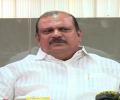
The BJP has defended its leader Shone George's criticism of a Malayalam newspaper, Deepika, alleging it was favouring the UDF ahead of Kerala's Assembly elections. The party claims it respects all religions and aims for equal treatment.

The Supreme Court of India has emphasised the importance of open access to all temples and 'maths' for everyone, warning that excluding any denomination would negatively impact Hinduism and divide society. This statement was made during hearings on petitions related to discrimination against women at religious sites and the scope of religious freedom.

BJP state general secretary S Suresh defends party leader Shone George's criticism of a Malayalam daily, Deepika, alleging its misuse for political interests ahead of the Kerala Assembly polls. The BJP maintains it respects all religions and aims for equal justice, denying any communal stance.

Gurpreet S Kherha, who was denied a job at Tri-County Lexus -- a car dealership in Little Falls, New Jersey -- due to its 'no-beard' policy will get $50,000 in an out-of court settlement with the firm.
The Centre has asked the Supreme Court to reconsider its judgements decriminalising adultery and same-sex relationships, arguing they were based on a subjective application of 'constitutional morality'.
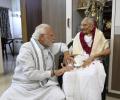
Who were the mothers who shaped Mahatma Gandhi, Sachin Tendulkar, Narendra Modi and other well-known Indians?
A US federal government commission has raised concerns about the state of religious freedom in India, recommending its designation as a 'Country of Particular Concern' and suggesting targeted sanctions.
